In this article
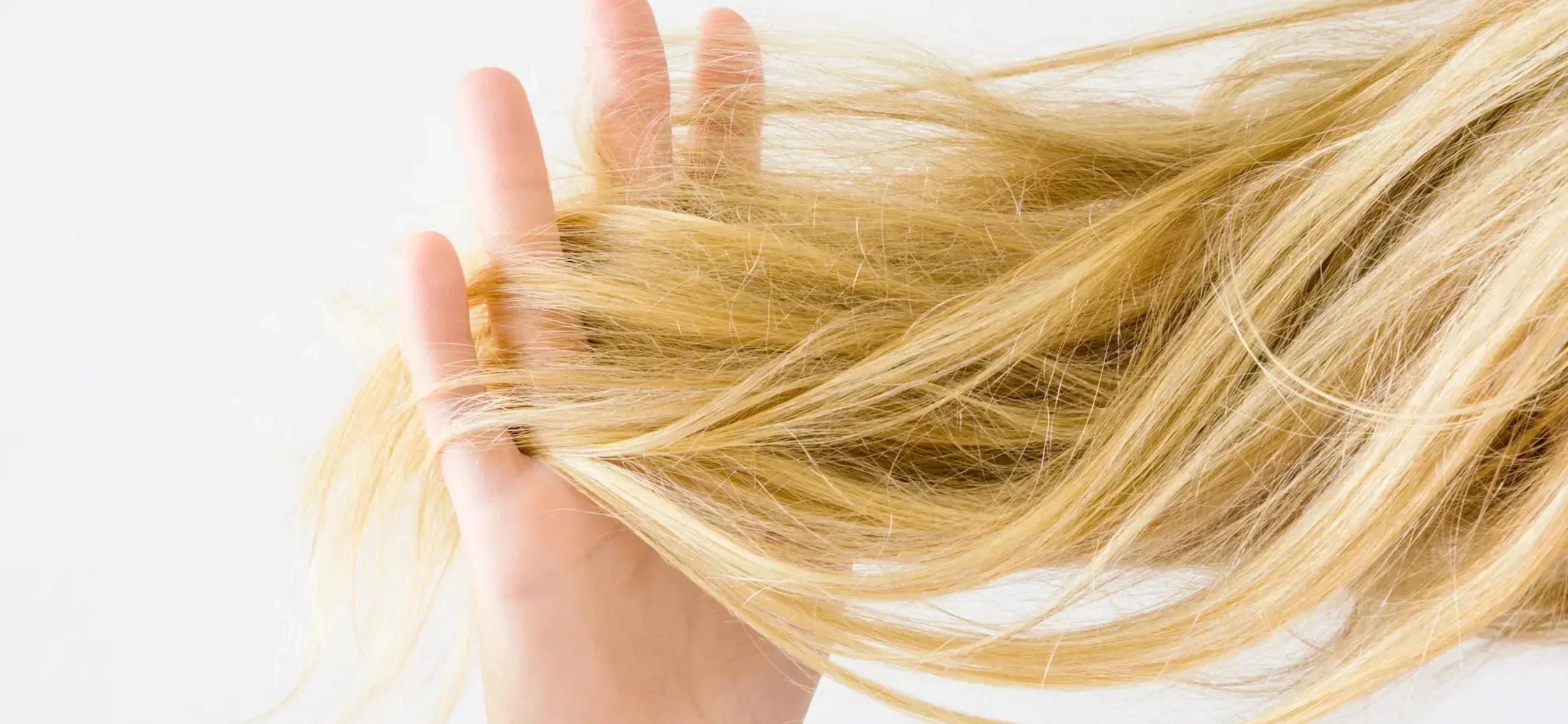
Mats are not just “messy hair.” They occur when individual loose or attached hair strands entangle each other and accumulate shed hair to create a hard clump or knot.
The occurrence of mats is not restricted to any particular group of people. They could arise after several windy days, after sickness, which makes it hard for the person to take care of their hair, after wearing protective styles for an extended period or after several nights of sleeping with loosely tied hair. However, curly hair, coiled hair, long hair, dry hair, and damaged hair can easily form mats.
Is your hair tangled, knotted, or truly matted?
A tangle involves strands of hair crossing paths with each other and getting entangled. You might need some effort to remove it at first, but then it usually gives way using your fingers or a wide tooth comb. A knot is more focused and may involve many strands of hair or even one strand winding around itself.
A mat is tougher than a tangle and a knot. More hair strands including dead strands fall out of the scalp and intertwine to form the mat. Sometimes products or dirt might be responsible for compaction of the mass.
|
Condition |
How it feels |
Typical cause |
Best first response |
|
Light tangle |
Loose snag between a few strands |
Wind, movement, or daily styling |
Finger-detangle gently |
|
Tight knot |
Small, concentrated catch |
Dryness, split ends, or friction |
Add slip and loosen from the edges |
|
Early mat |
Dense cluster with limited movement |
Shed hair, buildup, or missed detangling |
Saturate and work in tiny sections |
|
Severe mat |
Hard or felt-like mass near the scalp or lengths |
Long-term compaction or extended neglect |
Seek professional assistance |
Initial mats can develop on the neck, behind the ears, under long hair, or the bottom of a protective style. High friction spots like these come into contact with clothing, pillows, and other mats all day long.
Avoid assuming that matting means poor personal hygiene. Illness, depression, disability, institutionalization, sensory impairments, and physical restrictions can interfere with regular grooming practices. It’s about the hair – not about making judgments.
If the mat is very tight to the scalp, painful, associated with sores, or is covering a significant portion of the scalp, do not immediately grab your scissors. A seasoned detangling stylist might be able to save more hair.
Why hair matts?
Matting occurs from a mixture of shed strands, friction, dryness, and time. Shedding is natural for hair, however, not all strands that come off actually end up on the ground. Instead, they stay inside the hair mass especially if the hair texture is curly, coily, thick, and long.

Without detangling regularly, the shed strands get tangled around the rest of the strands. Movement during daily activities makes the connection even tighter. The knot can become so tight that it takes a lot of effort to untangle it after sleeping, using scarves, exercising, or combing the hair.
Dryness is an additional issue. The rougher and lifted the cuticle, the more easily it catches the neighboring strands. Chemical processes done to the hair, split ends, heat styling, and weather conditions affect the cuticle. Conditioned hair does not necessarily avoid mats, however, smooth strands are more likely to unravel from each other.
Product build up acts as a glue. Layers of hair care products, oils, sweat, sprays, and debris accumulate on the hair strands and make them stick together. The addition of more products does not always solve the issue of dryness, instead making it more difficult to comb out because of the heavier surface.
Environment conditions are also important. Strong winds blow hair in different directions, and humid conditions can make some hair textures expand and get tangled. Cold dry air causes brittleness and static. High collars, woolen scarfs, and rough pillowcases contribute to more friction in the area of nape.
Protective styles either prevent or encourage mats. Comfortable and properly styled hair is organized and experiences fewer manipulations. However, keeping protective style for too long causes accumulation of shed strands at the roots. Upon removing the style, those strands will entwine into a tight knot.
How to remove tangles from matted hair step by step?
Give yourself plenty of time to work before you start. Attempting to untangle a tough mat when you are under pressure results in excessive pulling and frustration.
1. Examine the mat on dry hair. Pinpoint the area where the mat is located and find out how close it is to the scalp. Do not proceed to brushing straightaway. Look for any clips, pins, thread, or extensions in there.
2. Detach the untouched hair. Break off loose twists and secure them with clips. This way, the untangled strands will not attach themselves to the tangled ones.
3. Make the mat softer. Pour some water on the mat and apply a lot of conditioner or detangling spray. Squeeze the solution into the mat instead of rubbing it. Allow the mat to rest for some time.
4. Work from the outside. Start picking some hair from the clump with your fingers. Move up from the tips, not down from the roots. You have to make the clump smaller, one hair at a time.
5. Detach the shed hair. There could be a lot of hair in the mat which has already fallen off the head. Gently take those strands out, instead of pulling the hair which is still attached to the knot.
6. Carefully use the narrower end of the comb. After you have created some openings, use the comb to carefully tease only small patches. Do not dig into the middle and pull downward.
7. Add lubrication when the resistance appears. The mat should stay soft and slippery. As soon as it starts drying or sticking, stop and apply more conditioner.
8 Start combing when the mat is loose. As soon as the clump turns into usual tangles, use a wide-toothed comb. Start from the tips and move up.
9. Twist the cleared part of the hair. When the mat is totally untangled, make the section into a loose twist or a braid so that it does not join other parts of the mat again.
Washing and conditioning
Detangled hair requires some settling time. It has undergone enough handling so far, and its next requirement is washing without causing the same issue once again.
Divide the hair into segments. Washing all the hair loose might cause the previously separated strands to get twisted again. Secure the segments but avoid pulling the roots too hard.
Cleansing should be done on the scalp, massaging the scalp with the tips of your fingers. Avoid piling up the strands onto your head or twisting them. The water should flow in the segments of hair down from the scalp.

After the cleansing procedure, apply conditioner liberally into the middle parts of the hair. If the hair was stuck inside a mat, then it may be dry and rough. However, refrain from brushing the hair right away, as it would cause even more damage. First of all, you need to smooth it with conditioner, and then you can run your fingers through each segment.
If your hair is dry, deep conditioning would be helpful. In case of severe matting, you cannot restore the strands completely with it. But it will increase the smoothness and the ease of styling the hair.
While rinsing the hair, allow the water to flow in the same direction as the strands do. Gently squeeze out the extra moisture and put each segment into a loose twist. Do not rub the hair on a rough towel.
Drying and fluffing the hair
Hair that is still wet tends to tangle very fast if it is left free, flipped around, or dried with a towel. The process of drying is essential to keep the hair organized and prevent excessive manipulations.
To begin with, press each section with a microfiber towel or a cotton T-shirt. Always move your hands downwards and along the natural hair direction. Apply a leave-in conditioner and heat protectant and comb them through with your fingers.

In order to dry the hair quickly and under control, choose the Laifen SE 2 hair dryer that will help to get rid of the water from the hair by using its fast flow while keeping the hair sections stretched and organized. Select the temperature comfortable enough and do not concentrate the flow of air in one place for a long time.
In case you want to keep the curl pattern intact, use the diffuser and dry the hair in sections without disrupting the pattern continuously. It is crucially important to ensure that the roots are completely dry especially before making any nighttime or protective hairstyle.
For the stretched blowout, start from the roots working towards the ends. Tug each section gently and focus on directing the flow of the air down. Do not use the brush until you feel that you can pass it through the section without getting tangled.
Do not swirl the air randomly and do not blow the ends everywhere. The airflow that moves chaotically will cause the strands to tangle with each other. Remember, it is much better to focus on the direction: from the roots to the ends, one section at a time.
How to prevent matted hair from returning?

Prevention is not about constantly brushing. It needs to provide consistent chances to remove excess hair before it gets stuck. The best timing depends on your hair type, length, style and how quickly you get entanglements.
Consistently detangle, but use the right technique for your hair type. Straight and loosely wavy hair can be detangled gently every day. Curly and coily hair can be sectioned and detangled with the help of conditioner on wash day.
Protect the hair at night. Long hair can be put into a loose braid, while textured hair may need twists, braids or any other low tension hairstyle. Satin or silk bonnet, scarf or pillowcase minimize friction and keep the strands in place.
Pay close attention to the nape. Carefully detangle, moisturize it and inspect it after wearing high collars, scarves or hairstyles rubbing against the neck.
Cleanse often enough to avoid accumulation. If your hair feels covered even after watering, it probably needs cleansing and not another application of oils and creams. Cleansed strands can slide past each other easily unlike greasy and residue-covered ones.
Do not wear protective hairstyles when the roots are tangled badly. On removal, untangle every section and clean shed hair before washing. Getting all the hair wet at once can cause it to entangle even more tightly.
Regular trims are important. Split ends work like tiny hooks, grabbing the surrounding strands and forming knots. Trimming will leave you with smoother hair and less trouble on wash day.
The most essential part of prevention is realism. If long detangling periods are hard to follow, opt for simpler styles keeping the hair separated and easy to handle. If ill health or physical limitations do not allow you to take care of your hair properly, ask someone for help before small tangles turn into painful mats.
Common queries
Does one detangle matted hair dry or wet?
Hair that is damp and filled with an intensive conditioner or detangling oil has the highest slip factor. One should never detangle dry or soaking wet hair since these two states promote hair breakage.
Which hair care products are effective in separating hard knots?
High-slip leave-in conditioning products, hair oils such as jojoba and coconut, and special detangling sprays help to ease the knots. Apply enough product to cover all hair strands to enable them to be separated.
At which point do I begin to comb matted hair?
One begins by working from the ends of the hair towards the roots. Sectioning the hair helps in preventing any pulling of hair on the scalp and making knots tighter.
Shop The Post