










In this article
Discovering the unique characteristics of your hair is a vital first step in ensuring its long-term health and beauty.
By understanding what makes your hair special, you’ll be better equipped to style and care for it with ease.
While there’s no one-size-fits-all approach to hair care, this simply means that every hair type has its own set of needs and preferences.
Embrace the individuality of your hair and enjoy the journey towards a radiant, healthy mane!
Have no fear! We’re here to help you understand your hair type so you can give it the care and attention that it needs.
So first, let’s dive in and take a look at what different types of hair there are.
A review of main hair types

There are two modern systems for identifying the type of hair you have, the L.O.I.S hair typing system and the Andre Walker hair typing system.
Both classification systems have their merits, but for this article, we’ll be using the Andre Walker hair typing system.
Originally created by Andre Walker, the personal stylist of Oprah Winfrey, in the 90s as a way to market his line of hair care products, this hair typing system has become widely accepted as the go-to classification system.
It splits hair into 4 types: straight hair, wavy hair, curly hair, and kinky/coily hair.
Within these four, there are three subcategories to determine which specific type of hair you have; however, we’ll keep things simple and stick to the four main types.
For each one, we will look at what its main characteristics are, its structure, and how to best take care of and maintain it.
Before we begin, it is essential to remember that no hair type is superior or inferior to others!
Each hair type has its unique qualities and beauty, and we aim to help you recognize your hair type and care for it accordingly with the help of this guide.
Straight hair
Let’s dive into the world of straight hair—Types 1A, 1B, and 1C.
Picture smooth strands with a sleek shine. We’ll unravel the secrets, from structure to care tips, to keep your straight hair looking fab.
Ready to make your hair journey effortlessly chic? Let’s go!
Characteristics:
Straight hair (Types 1A, 1B, and 1C) is the most commonly seen hair type around the world.
When properly cared for, this hair type has a smooth texture and a sleek appearance that reflects light, giving it a glossy finish.
Straight hair is characterized by the absence of natural curls or waves and is less prone to frizz when properly taken care of.
Structure:
Straight hair has a unique structure that gives it a smooth appearance.
Its cuticle is closed and round, which makes the hair less porous and effectively locks out moisture, water, and other products.
The round hair shaft and flat-lying cuticles also add to its smooth texture and make it more resistant to damage.
Care and maintenance:
When caring for straight hair, it’s best to use sulfate-free shampoos to avoid stripping your hair of its natural oils and condition your hair regularly to keep it moisturized.
If you use styling tools, make sure to choose ones that are suitable for straight hair.
Additionally, to protect your hair from the heat, use heat protectants, and for extra moisture, consider deep conditioning treatments once in a while.
By following these tips, you can help keep your straight hair healthy and shiny.
Wavy hair
Ready to ride the wave of your gorgeous hair? Types 2A, 2B, and 2C bring the perfect blend of straight and curls.
Let’s explore the ins and outs, from playful waves to easy care tips. Your wavy adventure starts now!
Characteristics:
Wavy hair (Types 2A, 2B, and 2C) falls between straight and curly hair.
It is characterized by having strands that form loose waves or s-shaped waves, maintaining a balance between straight and tightly curled textures.
This hair type is often considered to be versatile and can be styled in a variety of ways to suit different preferences and occasions.
Structure:
Wavy hair is identified by its distinctive s-shaped pattern, with the cuticle often partially raised.
A raised cuticle increases the hair’s porosity when compared to straight hair.
This structure enables increased absorption of moisture and hair products, which can be an advantage when styling and caring for your hair.
Care and maintenance:
To care for wavy hair, use a hydrating shampoo to retain moisture.
Apply leave-in conditioners or curl enhancers to define waves, and avoid excessive brushing to prevent frizz. It is recommended to allow your hair to air-dry sometimes or use a hair dryer with a good diffuser on low heat when blow-drying for optimal results.
Curly hair
Ready to embrace those fabulous curls? Types 3A, 3B, and 3C bring a whirlwind of texture and volume.
Let’s dive into the curly world, from gorgeous spirals to expert care tips. Get ready for a curly adventure that’s as unique as you are!
Characteristics:
Curly hair (Types 3A, 3B, and 3C) exhibits a diverse range of curls, spanning from loose loops to corkscrew curls.
It tends to be thicker, full of body, and is more susceptible to frizz.
Curly hair can have a lot of volume and a combination of different textures.
Structure:
The structure of curly hair is characterized by a spiral or ringlet pattern, typically accompanied by a naturally elevated cuticle layer, leading to increased porosity.
This leads to the hair being more prone to frizz and necessitates additional moisture to sustain its well-defined shape.
Care and maintenance:
Maintain curly hair by using sulfate-free, moisturizing shampoos to prevent dryness.
It is recommended that you only wash your hair once a week because it’s naturally less oily than straighter hair types, but regular deep conditioning will help retain moisture and elasticity.
Gently detangle using a wide-tooth comb or fingers and protect your hair at night with a satin or silk scarf, employing the “pineappling” method to protect your hair while sleeping.
Kinky hair (tightly curled)
Welcome to the world of Kinky or Coily hair (Types 4A, 4B, and 4C).
These curls are a testament to individuality, featuring tight, coil-like patterns that deserve special care.
Embrace the uniqueness, density, and distinct curl formations that define this hair type.
Let’s dive into tips for nurturing and celebrating the natural beauty of kinky curls!
Characteristics:
Kinky or Coily hair (Types 4A, 4B, and 4C) showcases tight, coil-like patterns or dense, zigzag formations.
This hair type is characterized by its high density and unique curl patterns.
Such hair types are distinctive in their appearance, can be both wiry and coarse, and thus require more specific attention when it comes to hair care and styling.
Structure:
Kinky hair can range from having tightly coiled patterns to even tighter z-angled coils, and it always has high porosity and elevated cuticles.
Due to the high porosity and highly-elevated cuticle, this hair type is more susceptible to dryness.
Therefore, it is crucial to establish a routine that includes regular moisture treatments to retain the natural curl pattern.
Care and maintenance:
Care for kinky hair is very similar to the tips for curly hair, but perhaps you need to be more careful when looking after your kinky curls.
It involves using sulfate-free shampoos and co-washing (conditioner-only washing) as needed.
Being naturally dry, regular moisturizing with leave-in conditioners or oils is crucial.
Detangle carefully in sections to prevent breakage, and protect hair at night with a satin or silk scarf, employing the “pineappling” method to protect your hair while sleeping.
Fast check! The differences among hair types
Ever pondered why hair is as diverse as personalities?
Explore the captivating realm of “What are the differences among different hair types?”
Uncover the mysteries behind your strands, from textures to behaviors.
This insightful journey will empower you to embrace and understand the distinctive beauty of your hair.
| Straight hair | Wavy hair | Curly hair | Kinky/Coily hair | |
| Curl pattern | None | Slight waves | Well-defined curls | Tight coils |
| Texture | Smooth | Soft with moderate body | Coarser with volume | Very coarse and dense |
| Volume | Often lacks volume | Moderate volume | Varies, can be voluminous | Varies, can be voluminous |
| Maintenance | Low maintenance | Moderate maintenance | High maintenance | High maintenance |
| Styling options | Easily straightened | Versatile styling options | Varied styling options | Limited styling options |
| Frizz | Less prone to frizz | Moderate frizz | Prone to frizz | Prone to frizz |
| Styling time | Quick styling | Moderate styling time | Longer styling time | Longer styling time |
| Heat sensitivity | Tends to handle heat well | Moderate heat sensitivity | Sensitive to heat damage | Sensitive to heat damage |
| Products & styling | May require fewer products | Uses styling products moderately | Requires more styling products | Requires more styling products |
| Common issues | Lacks natural volume | Potential for frizz | Frizz, dryness, and shrinkage | Shrinkage, tangles, and dryness |
How to find out your hair type?
Determining your hair type using hair typing systems involves identifying specific characteristics such as texture, curl pattern, and porosity.
Follow these steps to find out your hair type:
- Understand hair typing systems: Familiarize yourself with popular hair typing systems, such as the Andre Walker System, the LOIS System, or the FIA System.
- These systems categorize hair based on factors like curl pattern, thickness, and texture.

2. Clean, dry hair: Lead with freshly washed and thoroughly dried hair. This ensures an accurate assessment of your natural hair characteristics without the influence of products.
3. Identify curl pattern: Assess your natural curl pattern, which is often categorized into types from straight (Type 1) to coily or kinky (Type 4). Each category represents a different degree of curliness or waviness.
4. Evaluate texture: Determine your hair’s texture by assessing its thickness. Hair typing systems often categorize texture as fine, medium, or coarse. Fine hair strands are thinner, while coarse strands are thicker.
5. Consider porosity: Determine your hair’s porosity by observing how it absorbs and retains moisture. High porosity hair may absorb moisture quickly but struggle to retain it, while low porosity hair may resist absorbing moisture.

6. Match characteristics to hair type: Compare your observations to the criteria outlined in the hair typing system you’ve chosen. This will help you identify the specific category or categories that best describe your hair type.
7. Experiment and adjust: Keep in mind that hair typing is a general guideline, and individual characteristics may vary. Experiment with different hair care routines and products to find what works best for your unique hair type.
Choose good hair dryers for your hair
Unlock the secrets to perfect hair styling by choosing the ideal hair dryer for your unique hair type.

General tips:
-
Technology: Try a hair dryer with ceramic or tourmaline technology for even heat distribution and reduced damage across all hair types.
-
Ionic technology: Ionic technology helps minimize frizz and enhance shine for a polished finish.
-
Brand reputation: You can select from reputable brands with positive reviews to ensure the quality and longevity of your chosen hair dryer.
By tailoring your selection to your hair type and incorporating the right attachments, you can optimize your styling routine, achieving the desired look while prioritizing the health of your hair. Remember to follow the manufacturer’s guidelines for safe and effective use.
Straight hair
Hair dryer: A lightweight dryer with adjustable heat settings, suitable for quick and efficient drying.
Attachment: The concentrator nozzle is a must for achieving a smooth, straight finish. It helps direct airflow precisely for targeted styling.
Coily hair:
Hair dryer: Choose a dryer equipped with ionic technology to reduce frizz and promote shine. Multiple heat settings provide flexibility.
Attachment: Coily hair benefits greatly from a diffuser attachment. This accessory helps evenly distribute airflow, enhancing natural curls and minimizing frizz for a defined look.
Wavy/Curly hair:
Hair dryer: A hair dryer that offers multiple speed settings to accommodate varying styling preferences. Adjustable heat settings provide versatility.
Attachment: The diffuser attachment is helpful for wavy hair, as it encourages the natural wave pattern, creating defined and frizz-free waves.
Kinky hair:
Hair dryer: Prioritize a powerful dryer with a cool shot button to set styles. Various heat settings permit customization based on hair needs.
Attachment: Consider a comb attachment or pick attachment to aid in detangling and managing kinky hair, providing ease in styling.
Know your hair to improve your hair
Understanding your hair type is a crucial first step when it comes to hair care and it’s easy to overlook this step in hair care but trust us, it’s worth it.
We encourage you to take the time to get to know your hair type before diving into any online tutorials.
We don’t want you to take any risks that could potentially damage your hair.
Also, it’s worth noting your hair type can vary depending on changes in the climate and or environment, so spend some time getting to know your hair, and you won’t regret it.

Finally, we want to stress that your hair is beautiful, no matter what type it is.
Embrace your natural beauty and treat your hair with the best care possible by using the right hair care products and styling tools.
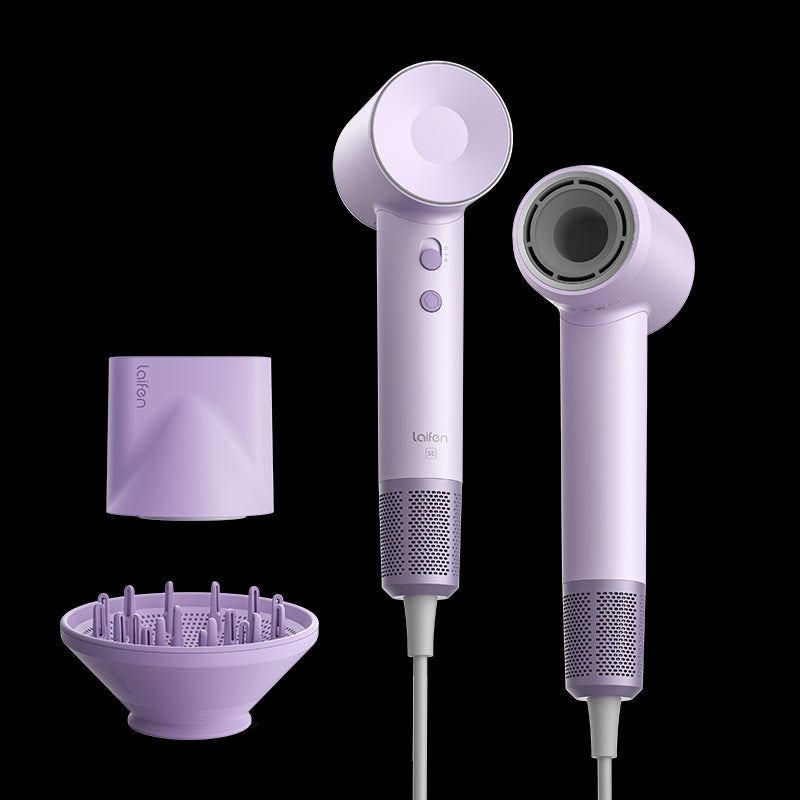
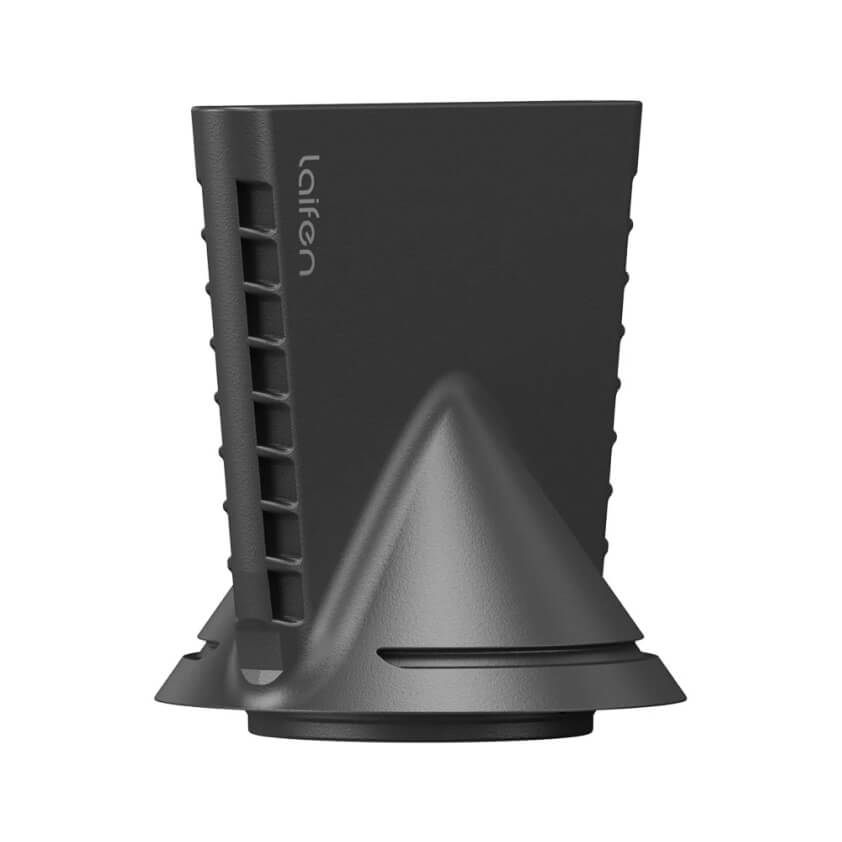
Check out the Laifen Swift Special high-speed hair dryer, which comes with 3 nozzles for every hair type, so you‘ll never be left wanting!
FAQs
What does “hair type” actually mean?
Hair type describes the natural shape and behavior of your hair strands. It’s usually based on curl pattern (straight, wavy, curly, or coily), but also includes thickness, density, and porosity.
How can I tell my hair type at home?
Wash your hair and let it air-dry without products. Observe how it dries naturally—straight, slightly wavy, curly, or tightly coiled. This reveals your true hair pattern without outside influence from heat or styling tools.
What are the main hair type categories?
Hair is commonly grouped into four types: Type 1 (straight), Type 2 (wavy), Type 3 (curly), and Type 4 (coily). Each type has subcategories (A, B, C) that describe how loose or tight the pattern appears.
Can one person have more than one hair type?
Yes. Many people have multiple hair types on one head. For example, hair may be wavy near the crown and curlier underneath.
Genetics, hormones, and damage can all influence variations across different sections of hair.
Does hair type change over time?
Hair type can change due to aging, hormonal shifts, pregnancy, medication, or repeated heat and chemical treatments. While your genetic pattern stays the same, texture and curl definition may loosen or tighten over time.
Is hair type the same as hair thickness?
No. Hair type refers to curl pattern, while thickness describes the width of individual strands—fine, medium, or coarse.
You can have curly hair with fine strands or straight hair with coarse strands. Both factors affect styling and product choices.
Why does knowing my hair type matter?
Understanding your hair type helps prevent damage and frustration. It guides you in choosing the right shampoo, styling techniques, heat settings, and tools.
Can products or tools change my hair type?
Products and tools don’t permanently change your hair type, but they can enhance or suppress your natural pattern.
Proper care, moisture, and gentle styling help your natural texture look its best, while misuse may cause dryness or loss of definition.